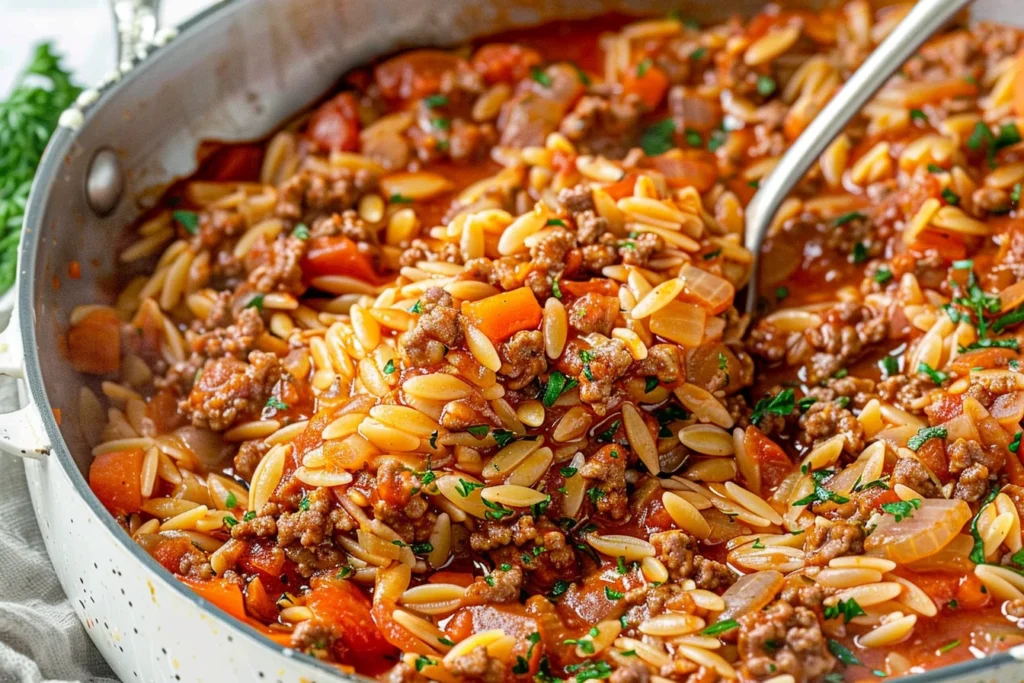
The aroma that fills a kitchen during the slow simmer of a Bolognese is perhaps the most universal language of comfort. It begins with the sharp, clean scent of onions and garlic hitting warm olive oil, quickly deepening into the rich, Maillard-driven fragrance of browning beef. As the tomato paste carmelizes and the herbs release their oils, the air becomes thick with a savory promise. This is the kind of scent that stops people in their tracks when they walk through the front door, immediately signaling that the day’s stresses are over and a nourishing, home-cooked meal is imminent.
My first encounter with this specific one-pot variation happened on a particularly frantic Tuesday. I had a craving for the deep, complex layers of a traditional Ragù alla Bolognese, but lacked the patience for a three-hour simmer and the energy to clean multiple pots and a pasta strainer. By merging the starch-rich cooking method of risotto with the classic flavor profile of a meat sauce, I discovered that the orzo acts as a bridge. It doesn’t just sit in the sauce; it becomes part of it. That first bite was a revelation of velvety texture and concentrated beef flavor that traditional boiled pasta simply cannot match.
This dish has since become a cornerstone of my culinary repertoire, representing the intersection of heritage techniques and modern efficiency. It carries the soul of a Sunday gravy but fits into the timeline of a weeknight dinner. Culturally, it nods to the Italian tradition of “pastasciutta” where the pasta is perfectly “dry” or coated, yet it utilizes the humble orzo, a grain-shaped pasta that excels at absorbing liquid. Whether you are feeding a crowd of hungry teenagers or looking for a sophisticated solo meal, this recipe delivers a restaurant-quality experience with the soul of a family heirloom.
Why You Will Love This Dish
Unparalleled Creamy Texture Without Heavy Cream
The primary reason this version of Bolognese stands out is the physical chemistry of the one-pot method. When you boil orzo in a separate pot of water, you drain away all the precious starches. In this recipe, the orzo releases its starch directly into the tomato and beef broth base. This creates a natural emulsification, resulting in a sauce that is luxuriously silky and thick. The pasta ends up infused with the savory essence of the beef and aromatics from the inside out, rather than just being coated on the surface.
Complexity Built Through Layered Aromatics
While many quick pasta dishes rely on heavy seasoning to provide flavor, this Orzo Bolognese relies on the “Soffritto” method. By finely chopping carrots, celery, and onions, you create a foundation of sweetness and earthiness that balances the acidity of the tomatoes. The addition of tomato paste, which is allowed to “fry” slightly before the liquids are added, introduces a deep umami characteristic that mimics a sauce that has been cooking for hours. Every spoonful offers a balanced profile of sweet, salty, acidic, and savory notes.
Minimal Cleanup and Maximum Efficiency
In a busy household, the “one-pot” designation is more than a convenience; it is a lifestyle upgrade. By browning the beef, sautéing the vegetables, and simmering the pasta in a single heavy-bottomed vessel, you preserve every bit of flavor (the fond) that sticks to the bottom of the pan. More importantly, you finish the meal with only one pot to scrub. This efficiency does not come at the cost of quality, making it the ultimate “win-win” for the home cook who values both their time and their palate.
What Makes This Recipe Special
The secret to this recipe’s superiority lies in the ratio of liquid to starch and the specific sequence of browning. Standard recipes often treat the sauce and the pasta as two separate entities that meet only at the very end. This “assembly” approach often leads to a thin sauce that pools at the bottom of the bowl. Our method treats the orzo like arborio rice in a risotto. By toasting the orzo slightly in the rendered beef fat before adding the broth, we create a nutty undertone and ensure the pasta maintains an “al dente” bite even as it absorbs the surrounding juices.
Furthermore, the choice of beef over other proteins provides a robust, iron-rich depth that anchors the dish. In many traditional recipes, wine is used to deglaze the pan and add acidity. In this refined version, we rely on the high-quality acidity of crushed tomatoes and the deep mineral notes of a well-reduced beef broth. This creates a flavor profile that is inclusive, sophisticated, and incredibly clean on the palate. The result is a concentrated, “tight” sauce where every grain of orzo is a vessel for maximum flavor.
Ingredient Essentials and The Science of Flavor
The Protein Foundation: Ground Beef
Using 80/20 or 85/15 ground beef is essential here. The fat content is not just for moisture; it carries the fat-soluble flavors of the dried oregano and basil. As the beef browns, it undergoes the Maillard reaction, creating complex sugars that give the sauce its “meaty” backbone. For a lighter version, you could substitute ground turkey or chicken, but you would lose some of that classic Bolognese richness.
The Aromatic Trio: The Soffritto
Carrots, celery, and onions are the unsung heroes of Italian cooking. The carrots provide natural sugar to counteract the tomato’s acidity, the celery adds a hint of bitterness and saltiness, and the onions provide the aromatic sulfur compounds that mellow into sweetness. Finely dicing these is key so they melt into the sauce texture-wise.
Orzo: The Starch Engine
Orzo is a pasta, not a grain, usually made from durum wheat semolina. Its small surface area makes it perfect for this method because it cooks quickly but has enough surface area to release a significant amount of starch. If you need a Gluten-Free option, use a high-quality GF orzo made from corn or rice, but keep in mind you may need 10% less liquid as GF pastas often absorb differently.
Tomato Paste and Crushed Tomatoes
The tomato paste is the “concentrator.” Frying it until it turns from bright red to a deep brick red is a professional technique called “pincé.” This removes the raw metallic taste. The crushed tomatoes provide the body and the pectin needed to give the sauce volume.
Beef Broth and Herbs
The broth acts as the cooking medium for the pasta. Using a high-quality beef broth adds a layer of gelatinous mouthfeel. The dried basil and oregano are added early so the heat can rehydrate them and infuse the oil. For a bright finish, fresh parsley is non-negotiable.
The Masterclass: Step-by-Step Narrative
Phase 1: Developing the Base (The Sear and the Sweat)
Begin by heating your olive oil in a large Dutch oven or heavy skillet over medium-high heat. Once the oil shimmers, add the ground beef. The most common pitfall here is crowding the pan or moving the meat too much. Let it sit undisturbed for 3-4 minutes to develop a dark brown crust. Once browned, break it apart with a wooden spoon. Add the onion, carrot, and celery. Lower the heat to medium. You are looking for the “Visual Cue” of the onions becoming translucent and the carrots softening slightly. This usually takes about 5-7 minutes.
Phase 2: Concentrating Umami
Create a small well in the center of your meat and vegetable mixture. Drop in the tomato paste and the minced garlic. Stir them in that center spot for about 90 seconds. You will smell the garlic become fragrant and the tomato paste will begin to stick slightly to the bottom. This “Visual Cue” of a dark red film on the pan is exactly what you want. Now, stir in the dried herbs and red pepper flakes. The heat “blooms” the spices, waking up flavors that have been dormant in your pantry.
Phase 3: The Deglaze and Simmer
Pour in the beef broth and the crushed tomatoes. Use your wooden spoon to scrape up all those browned bits from the bottom of the pan—that is “liquid gold” flavor. Once the liquid reaches a gentle boil, stir in the dry orzo. Lower the heat to a simmer and cover the pot.
Phase 4: The Absorption Phase
Set a timer for 10 minutes, but stay close. Unlike boiling pasta in a large vat of water, one-pot pasta requires occasional stirring to prevent the orzo from sticking to the bottom. If the sauce looks too thick before the pasta is tender, add an extra splash of broth. The “Visual Cue” of readiness is when the orzo is plump and tender to the tooth, and the sauce has thickened into a cohesive, velvety glaze that clings to the spoon.
Creative Variations and Customizations
The Spicy Kick
For those who enjoy a lingering heat, double the red pepper flakes and add a tablespoon of chopped Calabrian chilis during the aromatic phase. This adds a smoky, fruity heat that cuts through the richness of the beef perfectly. You can also swap the black pepper for cracked white pepper for a more floral, sharp spice profile.
The Mediterranean Twist
Incorporate a tablespoon of capers and half a cup of sliced Kalamata olives in the final 5 minutes of cooking. The brine from these ingredients adds a Mediterranean brightness. Serve this version with a dollop of creamy feta cheese instead of Parmesan to lean into the salty, tangy profile.
The Hidden Veggie Powerhouse
To increase the nutritional density without changing the flavor, add finely grated zucchini or mushrooms during the browning of the beef. The mushrooms, in particular, provide an extra layer of umami that complements the beef. Because they release water, you may need to simmer the sauce for an extra 2 minutes uncovered at the end to reach the desired thickness.
Serving and Pairing Suggestions
Plating this dish should reflect its rustic elegance. Use wide, shallow bowls rather than flat plates to keep the heat trapped. A generous dusting of freshly grated Parmesan cheese is essential, as the residual heat will melt it into the top layer of the orzo. Top with a flourish of freshly chopped flat-leaf parsley for a pop of color and a grassy freshness that cuts through the savory weight.
For pairings, consider a crisp, acidic salad to provide a textural contrast. A simple arugula salad with a lemon-tahini dressing works beautifully. For a non-alcoholic beverage, a sparkling verjuice or a high-quality pomegranate juice diluted with soda water provides the necessary tannins and acidity to cleanse the palate between bites of the rich Bolognese.
Storage, Reheating and The Next Day Magic
This Orzo Bolognese stores exceptionally well, often tasting better the next day as the flavors have more time to marry. Store in an airtight container for up to 4 days in the refrigerator.
When reheating, remember that the orzo will continue to absorb liquid as it sits. To restore the original silkiness, add a tablespoon or two of water or broth before microwaving or reheating on the stove. If you have leftovers, you can transform them into “Arancini-style” bites. Simply chill the mixture until firm, roll into balls, coat in breadcrumbs, and air-fry until crispy. The starch in the orzo makes them hold together perfectly without the need for additional binders.
Helpful Pro Tips from the Kitchen
Do not rinse your orzo. The surface starch is your best friend in a one-pot meal. Rinsing it will result in a thin, watery sauce that fails to emulsify.
Always mince your garlic fresh. Pre-minced garlic in a jar often has a bitter, acidic preservative flavor that can ruin the delicate balance of the Soffritto. If you want a milder garlic flavor, use a microplane to turn the garlic into a paste so it melts into the oil instantly.
Control your salt. Because the beef broth and canned tomatoes both contain sodium, wait until the very end of the cooking process to do your final seasoning. The sauce concentrates as it reduces, and what tasted fine at the beginning might be too salty by the end.
Hearty One-Pot Orzo Bolognese
- Prep Time: 15 Minutes
- Cook Time: 25 Minutes
- Total Time: 40 Minutes
Description: A rich and comforting one-pot meal featuring tender orzo pasta simmered in a deeply flavored beef and tomato ragù. This SEO-optimized recipe uses a specialized starch-reduction method to create a silky, restaurant-style sauce with minimal cleanup.
Ingredients
The Meat and Aromatics
- 1 tablespoon high-quality olive oil
- 1 lb ground beef (85% lean recommended)
- 1 medium yellow onion, finely chopped
- 1 large carrot, finely peeled and minced
- 1 celery stalk, finely minced
- 4 cloves garlic, minced
The Sauce Base
- 1/4 cup tomato paste
- 1 (28 oz) can crushed tomatoes
- 1 cup high-quality beef broth
- 1 teaspoon dried oregano
- 1 teaspoon dried basil
- 1/2 teaspoon red pepper flakes (optional)
- Salt and freshly ground black pepper to taste
The Pasta and Finish
- 1 cup dry orzo pasta
- 1/4 cup grated Parmesan cheese
- 2 tablespoons fresh flat-leaf parsley, chopped
Instructions
- Heat the olive oil in a large Dutch oven or deep skillet over medium-high heat. Add the ground beef and cook without stirring for 3-4 minutes until a deep brown crust forms. Break the meat into small crumbles with a wooden spoon and cook until no longer pink.
- Add the chopped onion, carrot, and celery to the pot. Reduce heat to medium and sauté for 6-8 minutes until the vegetables are soft and the onions are translucent.
- Stir in the garlic and tomato paste. Cook for 1-2 minutes, stirring constantly, until the tomato paste darkens in color and smells slightly toasted.
- Add the dried oregano, dried basil, and red pepper flakes. Stir for 30 seconds to release the oils.
- Pour in the crushed tomatoes and beef broth. Use the spoon to scrape any browned bits from the bottom of the pot.
- Stir in the dry orzo pasta. Bring the mixture to a gentle boil, then immediately reduce the heat to low.
- Cover the pot and simmer for 10-12 minutes. Stir the pot every 3-4 minutes to ensure the orzo does not stick to the bottom.
- Once the orzo is tender and most of the liquid has been absorbed into a thick sauce, remove from heat.
- Stir in the grated Parmesan cheese and season with salt and pepper to taste.
- Garnish with fresh parsley and serve immediately while hot.