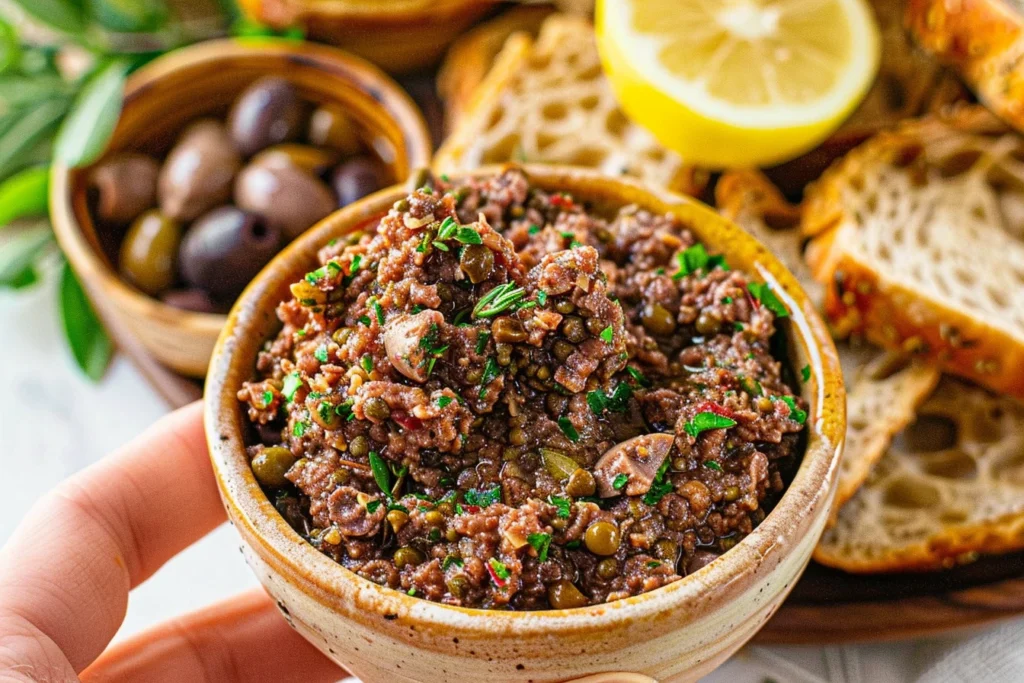
Olive tapenade is a sophisticated yet remarkably simple Mediterranean spread that has captured the hearts of food lovers globally. Originating from the Provence region of France, this bold condiment is a masterclass in balancing salty, acidic, and earthy flavors. It serves as a versatile powerhouse in the kitchen, transitioning seamlessly from a rustic appetizer on toasted baguette to a gourmet topping for grilled proteins. Its popularity stems from its ability to deliver an intense burst of umami with minimal preparation, making it a staple for both casual gatherings and high-end culinary presentations.
What Is Olive Tapenade?
Olive tapenade is a thick, textured paste primarily made from finely chopped or pureed olives, capers, and olive oil. While it is often grouped with common olive dips, true tapenade is distinct because of its concentrated saltiness and briny depth. Unlike standard olive tapenades that might rely on a single variety of fruit, a premium version uses a blend of olives to create a complex flavor profile. Historically, the word tapenade comes from the Provençal word for capers, “tapenas,” highlighting that while olives are the bulk of the dish, the capers provide the essential pungent kick that defines the recipe.
Why You’ll Love This Recipe
Intense Flavor Complexity
This recipe balances the wine-like richness of Kalamata olives with the buttery, mild notes of green olives. This duality ensures that the spread is neither too bitter nor too salty, providing a rounded palate experience.
Zero-Cook Convenience
In a world of complex recipes, this spread requires no heat. It is a raw preparation that preserves the nutritional integrity of the extra-virgin olive oil and the fresh enzymes in the herbs and garlic.
Professional Results in Minutes
By following a specific pulsing technique rather than constant blending, you achieve a professional, chunky texture. This prevents the spread from becoming a muddy paste, allowing each ingredient to retain its visual and textural identity.
Incredible Shelf Life
Because the ingredients are naturally cured or preserved in brine and oil, this tapenade stays fresh in the refrigerator for a significant amount of time. It is the perfect make-ahead component for busy hosts.
Flavor Profile Breakdown
The flavor profile of this Savory Olive Tapenade Spread is defined by a bold, savory front followed by a bright, citrusy finish. The primary sensation is saltiness, derived from the cured olives and capers, but this is immediately tempered by the fruity, peppery notes of high-quality extra-virgin olive oil.
The texture is meant to be slightly coarse. You will notice the soft meatiness of the olives contrasted with the tiny, firm bits of capers. The aroma is highly aromatic, dominated by the piney scent of fresh rosemary and the earthy, floral notes of thyme. Together, these elements create a spread that feels luxurious and deeply satisfying.
Ingredient Breakdown
Kalamata Olives
These dark, almond-shaped olives provide the deep, fruity, and slightly smoky base for the tapenade. They are usually cured in vinegar or olive oil, which adds a necessary tang.
Green Olives
Using a variety like Castelvetrano or Manzanilla adds a buttery texture and a vibrant color. Green olives are generally firmer and provide a mild bitterness that balances the darker Kalamata.
Capers
These small flower buds provide the “pop” of salt and acid. They are essential for the authentic Provençal taste. If you find them too salty, you can rinse them under cold water before use.
Fresh Garlic
Minced garlic adds a sharp, spicy bite. It acts as a natural flavor enhancer that bridges the gap between the briny olives and the fresh herbs.
Fresh Lemon Juice
Acidity is crucial for cutting through the richness of the oil and olives. Lemon juice brightens the entire dish and prevents the flavors from feeling too heavy on the tongue.
Extra-Virgin Olive Oil
This is the glue that holds the spread together. Use the best quality oil you have, as its peppery and grassy notes will be highly prominent in the final product.
Fresh Thyme and Rosemary
While many recipes use dried herbs, fresh leaves provide a much more vibrant essential oil content. Rosemary offers a woody depth, while thyme adds a subtle lemony sweetness.
Black Pepper
A small amount of freshly cracked black pepper adds a slow-building heat that lingers after the initial saltiness fades.
Step by Step Cooking Tips
Preparing the Olives
Always double-check that your olives are truly pitted. Even “pitted” olives occasionally contain a fragment of a stone. Pressing down on them with the side of a knife before putting them in the processor can help ensure they are clear and ready for blending.
The Pulsing Technique
The most common mistake is over-processing. You should use short, sharp pulses on your food processor. This keeps the tapenade “rustic.” A smooth tapenade often loses the individual flavor bursts of the capers and garlic.
Emulsifying the Oil
Adding the olive oil slowly while pulsing helps it coat every piece of olive perfectly. This creates a cohesive spread that doesn’t separate or leave a puddle of oil at the bottom of your serving bowl.
Allowing Flavors to Marinate
While you can eat this immediately, the tapenade improves significantly if left to sit for at least thirty minutes. This allows the garlic and herbs to infuse into the oil and the olives to absorb the lemon juice.
Variations and Customizations
Protein Additions
For a more substantial spread, you can finely chop Turkey Bacon and fold it into the mixture. The smoky flavor of Turkey Bacon complements the saltiness of the olives beautifully. If you prefer a more traditional meat pairing, serving the tapenade alongside thinly sliced Chicken Ham is an excellent choice.
Texture Swaps
If you want a crunchier version, try adding toasted pine nuts or chopped walnuts. This adds a nutty dimension and a firm texture that contrasts with the soft olives.
Heat Levels
For those who enjoy a spicy kick, add a pinch of crushed red pepper flakes or a small amount of diced jalapeño. The heat works surprisingly well with the acidity of the lemon.
Beef Pairings
If you are using this as a condiment for a main course, it pairs exceptionally well with seared Beef steaks or roasted Beef tenderloin. The saltiness of the tapenade acts as a “sauce” that enhances the natural richness of the meat.
Common Mistakes to Avoid
Using Canned Black Olives
Standard canned black olives lack the depth and fermented flavor required for a traditional tapenade. They tend to be too soft and watery. Always opt for jarred, brine-cured olives.
Over-Salting
Between the olives and the capers, there is already a high sodium content. Never add salt to the mixture until you have tasted the finished product. Most of the time, additional salt is completely unnecessary.
Using Bottled Lemon Juice
Bottled juice often has a metallic or overly acidic aftertaste. Freshly squeezed lemon juice is mandatory for the clean, bright flavor that makes a tapenade successful.
Neglecting the Herbs
If you don’t have fresh rosemary or thyme, it is better to use a small amount of fresh parsley rather than large amounts of dried herbs. Dried herbs can feel “woody” or gritty in a raw spread like this.
How to Store and Reheat Leftovers
Olive tapenade should be stored in an airtight container, preferably glass, in the refrigerator. To keep it at peak freshness, level the top of the spread with a spoon and pour a very thin layer of olive oil over the surface. This creates a natural seal against oxygen, preventing the garlic from oxidizing and the herbs from browning.
When you are ready to eat it again, do not reheat it. Tapenade is best served at room temperature. Take it out of the fridge about 20 minutes before serving to allow the olive oil to liquefy, as it may thicken or solidify in the cold. Stir it well to re-incorporate the surface oil back into the paste. It will stay fresh for up to two weeks if kept properly chilled.
Recipe Card
Prep Time
10 minutes
Cook Time
0 minutes
Total Time
10 minutes
Description
A bold and briny Mediterranean spread featuring a blend of Kalamata and green olives, accented with fresh herbs, garlic, and citrus. This versatile tapenade is perfect as an appetizer, a sandwich spread, or a gourmet topping for roasted beef.
Ingredients
- 1 cup Kalamata olives, pitted
- 1 cup green olives, pitted
- 2 tablespoons capers, drained
- 3 cloves garlic, minced
- 2 tablespoons fresh lemon juice
- 1/4 cup extra-virgin olive oil
- 1 teaspoon fresh thyme leaves
- 1 teaspoon fresh rosemary leaves
- 1/4 teaspoon black pepper
Instructions
- Place the pitted Kalamata olives, green olives, drained capers, and minced garlic into the bowl of a food processor.
- Add the fresh thyme leaves, rosemary leaves, and black pepper.
- Pulse the food processor 5 to 7 times in short bursts until the ingredients are coarsely chopped.
- Scrape down the sides of the bowl with a spatula to ensure even mixing.
- While pulsing again, slowly pour in the lemon juice and the extra-virgin olive oil.
- Continue to pulse until the desired consistency is reached, ensuring the mixture remains chunky and not a smooth puree.
- Taste the tapenade and adjust the acidity with more lemon juice if desired.
- Transfer the mixture to a serving bowl and let it rest for at least 15 minutes at room temperature before serving to allow the flavors to meld.
- Serve with toasted crostini, crackers, or as a garnish for grilled proteins.