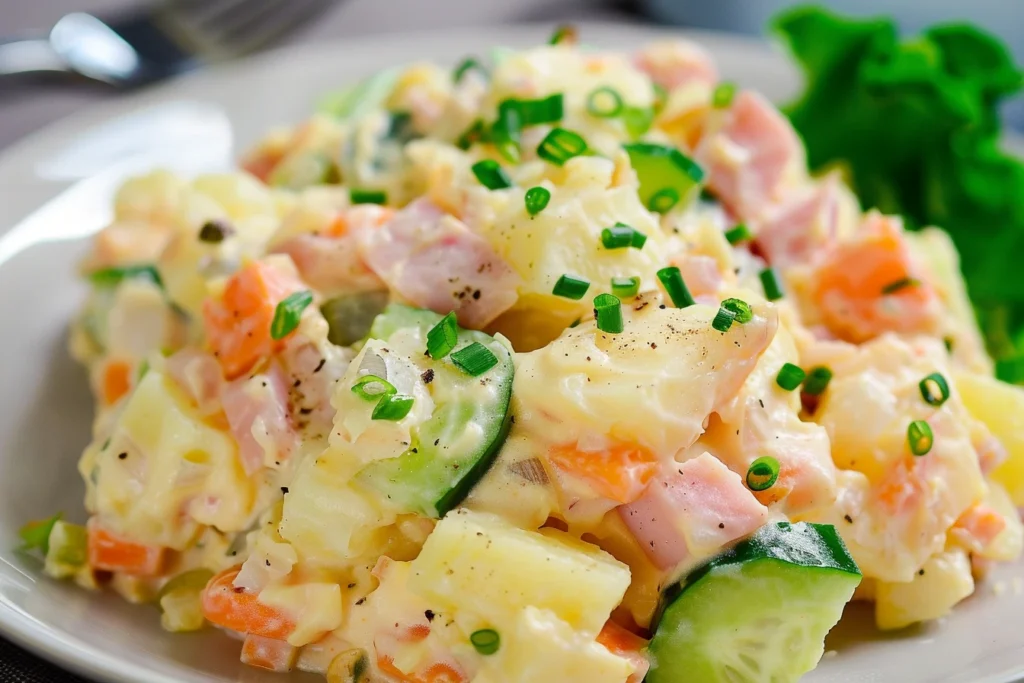
Imagine walking into a bustling izakaya in the heart of Tokyo or a quiet family kitchen in Osaka. Before the main course arrives, there is almost always a small, chilled bowl of what looks like clouds of gold and white, flecked with vibrant greens and pinks. This is Japanese Potato Salad, or potesara. Unlike its American cousin, which often features large, firm cubes of potato swimming in a loose dressing, the Japanese version is a textural masterpiece—semi-mashed, incredibly creamy, and balanced with a distinct umami depth that makes it disappear from the table in minutes.
The first time I experienced a truly authentic Japanese potato salad, I was struck by the aroma. It wasn’t just the scent of boiled starch; it was the sharp, clean brightness of rice vinegar mingled with the rich, velvety scent of high-quality mayonnaise and the subtle, smoky undertone of savory meats. The first bite is a revelation: soft, pillowy potatoes that melt on the tongue, followed by the sudden, refreshing crunch of salt-cured cucumbers and the hearty chew of diced chicken ham. It is comfort food in its purest, most sophisticated form, bridging the gap between a humble side dish and a culinary highlight.
This recipe is born from a desire to recreate that exact sensory experience while honoring specific dietary preferences. By swapping traditional components for high-quality chicken ham and focusing on the science of potato starch, we have crafted a version that is every bit as indulgent and flavorful as what you would find in a high-end Japanese deli. Whether you are serving this at a summer barbecue, as part of a traditional bento box, or simply as a comforting weekday side, it is a dish that carries the warmth of home cooking with the precision of professional technique.
Why You Will Love This Dish
Unmatched Textural Contrast
The hallmark of a superior Japanese potato salad is the play between textures. By partially mashing the potatoes while they are still steaming, you create a base that is both creamy and slightly chunky. This provides a luxurious mouthfeel that holds onto the dressing much better than cubed potatoes. When you add the crispness of the cucumbers and the snap of the carrots, every forkful offers a dynamic eating experience that never feels one-dimensional or heavy.
A Perfect Balance of Flavors
Many potato salads lean too heavily on fat or sugar. This recipe achieves a precise equilibrium. The natural sweetness of Yukon Gold potatoes is enhanced by a touch of sugar, while the acidity of rice vinegar cuts through the richness of the mayonnaise. The inclusion of savory chicken ham adds a layer of “umami”—that fifth taste that provides a satisfying, long-lasting savoriness. It is a dish that hits every part of the palate, making it incredibly addictive.
Versatility for Any Occasion
While it is technically a salad, this dish functions as a hearty side that pairs beautifully with almost anything. It complements grilled meats, fried seafood, or even a simple bowl of rice and miso soup. Because it is served chilled or at room temperature, it is the ultimate “make-ahead” meal. In fact, like many starchy dishes, the flavors actually deepen and harmonize after a few hours in the refrigerator, making it even better the next day.
What Makes This Recipe Special
The “standard” potato salad often suffers from two main issues: wateriness and a lack of seasoning within the potato itself. This recipe employs a traditional Japanese technique known as “vinegar seasoning” while the potatoes are hot. By adding rice vinegar to the steaming potatoes immediately after draining, the liquid is absorbed into the starch granules rather than sitting on the surface. This seasons the potato from the inside out, providing a bright foundation that prevents the final salad from tasting bland.
Furthermore, we utilize a specific moisture-control method for the vegetables. Instead of simply tossing raw cucumbers and onions into the mix, we salt-cure them. This draws out excess water, ensuring the vegetables stay crunchy for days without thinning out the creamy dressing. The result is a salad that maintains its thick, velvety consistency from the first serving to the last, representing a professional-grade attention to detail that elevates humble ingredients into something extraordinary.
Ingredient Essentials and The Science of Flavor
The Potatoes: Yukon Gold
For this recipe, Yukon Gold potatoes are non-negotiable. They possess a naturally buttery flavor and a medium-starch content that strikes the perfect balance between the fluffiness of a Russet and the waxiness of a Red Bliss. When mashed, they create a smooth, rich texture without becoming gummy.
- Substitution: If Yukon Golds are unavailable, use a mix of 70% Russet and 30% Red potato to mimic the texture.
The Protein: Chicken Ham
To maintain a savory profile while adhering to dietary constraints, we use diced chicken ham. It provides a lean, salty, and slightly smoky element that contrasts perfectly with the sweet potatoes. It adds body to the salad and ensures it feels like a complete, satisfying meal.
- Pantry Staple Swap: Sautéed mushrooms or smoked tofu can provide a similar umami hit for those seeking a vegetarian option.
The Dressing: Japanese Mayonnaise and Rice Vinegar
The soul of this dish lies in the mayonnaise. Japanese mayonnaise (such as Kewpie) is made with egg yolks rather than whole eggs and utilizes a blend of vinegars. It is richer, more yellow, and significantly more savory than Western mayonnaise. The addition of rice vinegar provides a mild, fruity acidity that lifts the entire flavor profile.
- Pro Tip: If using standard mayonnaise, add a pinch of MSG or a drop of soy sauce and an extra splash of rice vinegar to mimic the Japanese style.
The Aromatics: Cucumber and Onion
Thinly sliced cucumbers and onions are essential for freshness. The sulfur in the onion provides a bite that offsets the creaminess, while the cucumber adds a cooling element.
- Note on Science: Curing these in salt for 10 minutes breaks down the cell walls, removing the “raw” harshness of the onion and preventing the cucumber from leaking water into the mayo.
The Masterclass: Step-by-Step Narrative
Phase 1: The Potato Foundation
Begin by boiling your peeled Yukon Gold chunks in salted water. The goal is “fork-tender”—the potatoes should give way easily but not fall apart in the water. Once drained, return them to the hot pot for 30 seconds to “steam dry.” This removes surface moisture, which is the enemy of a creamy salad. While they are still piping hot, add the rice vinegar and sugar. Mash them roughly; you want about 60% smooth puree and 40% small, bite-sized chunks. Let this cool to room temperature before adding the mayonnaise to prevent the oil from separating.
Phase 2: The Vegetable Cure
While the potatoes cool, thinly slice your cucumbers and onions. Place them in a small bowl with a generous pinch of salt and massage them gently. Let them sit for at least 10 minutes. You will notice a significant amount of liquid pooling at the bottom. Squeeze the vegetables firmly with your hands or a clean kitchen towel to remove every drop of this liquid. This “dry” crunch is what defines a professional Japanese potato salad.
Phase 3: The Assembly
In a large mixing bowl, combine the cooled mashed potatoes, the squeezed vegetables, the diced carrots (which should be blanched until just tender), and the diced chicken ham. Fold in the Japanese mayonnaise gently. Season with salt and a generous amount of freshly cracked black pepper. The pepper is crucial; it provides a floral heat that cuts through the richness.
Creative Variations and Customizations
The Spicy Wasabi Kick
For those who enjoy a bit of heat, fold in one teaspoon of wasabi paste into the mayonnaise before mixing. This adds a nasal pungency that pairs exceptionally well with the chicken ham and provides a distinctly “adult” twist to the dish.
The Mediterranean Twist
Replace the chicken ham with sun-dried tomatoes and add a tablespoon of chopped capers. Use a lemon-infused rice vinegar to brighten the profile. This version moves away from the traditional izakaya style and toward a bright, summery fusion dish.
The “Everything” Garden Salad
Add hard-boiled eggs that have been roughly chopped and a handful of frozen peas (thawed). The egg yolks crumble into the dressing, making it even richer and more golden, while the peas add a pop of sweetness and color.
Serving and Pairing Suggestions
Presentation is key in Japanese cuisine. Serve the potato salad in small, rounded scoops using an ice cream scoop for a clean, professional look. Garnish with a sprinkle of chopped parsley or toasted sesame seeds.
For pairings, this salad is the perfect companion to a crisp, non-alcoholic sparkling cider or a chilled “Virgin Mojito” made with fresh mint and lime, as the acidity complements the creamy texture. If serving as part of a larger meal, pair it with grilled chicken skewers (Yakitori) or a plate of crispy vegetable tempura. The coolness of the salad provides a refreshing counterpoint to hot, fried, or grilled foods.
Storage, Reheating, and “The Next Day” Magic
Japanese Potato Salad should always be stored in an airtight container in the refrigerator. It will stay fresh for up to 3 days. Because it contains mayonnaise, it should never be frozen, as the emulsion will break and the texture will become grainy.
The “next day” magic is real with this recipe. To transform leftovers, try spreading a thick layer of the chilled salad between two slices of soft white bread to create a “Potato Salad Sando”—a popular Japanese convenience store staple. The starch and fats meld overnight, creating a spreadable, flavor-packed filling that requires no additional condiments.
Helpful Pro Tips from the Kitchen
The Temperature Rule: Never add mayonnaise to hot potatoes. If the potatoes are too warm, the mayonnaise will melt into an oily mess. Wait until they are barely warm to the touch or at room temperature.
The Squeeze Factor: The most common mistake is not squeezing the cucumbers enough. If you think you’ve squeezed them enough, squeeze them one more time. Any remaining water will turn the salad soggy within hours.
Consistency Control: If the salad feels too stiff after chilling, stir in a single tablespoon of milk or unsweetened soy milk. This loosens the starch and restores that signature “cloud-like” texture.
Professional Recipe Card
Prep Time: 20 Minutes | Cook Time: 15 Minutes | Total Time: 35 Minutes (plus cooling)
Description: An authentic, ultra-creamy Japanese-style potato salad featuring a semi-mashed texture, savory chicken ham, and crisp, salt-cured vegetables. Perfectly balanced with umami-rich Japanese mayonnaise and a hint of acidity.
Ingredients
The Base
- 1 lb Yukon Gold potatoes, peeled and cut into 1-inch chunks
- 1 teaspoon granulated sugar
- 1 tablespoon rice vinegar
- 1/2 teaspoon sea salt (for boiling water)
The Vegetables & Protein
- 1/2 cup carrot, peeled, diced, and blanched for 3 minutes
- 1/2 cup English cucumber, sliced into paper-thin half-moons
- 1/4 cup yellow onion, sliced paper-thin
- 1/2 cup chicken ham, cut into 1/4-inch dice
The Dressing
- 1/2 cup Japanese mayonnaise (Kewpie style)
- 1/2 teaspoon freshly cracked black pepper
- Salt to taste
Instructions
- Place the potato chunks in a large pot and cover with cold water. Add a pinch of salt. Bring to a boil, then reduce heat and simmer for 12–15 minutes until fork-tender.
- While potatoes cook, place sliced cucumbers and onions in a bowl with a pinch of salt. Toss and let sit for 10 minutes.
- Drain the potatoes thoroughly. Return them to the warm pot for 30 seconds over low heat, shaking the pot to evaporate all excess moisture.
- Transfer the hot potatoes to a large bowl. Sprinkle with sugar and rice vinegar. Mash the potatoes using a fork or masher until the desired consistency is reached (aim for a mix of smooth and chunky). Allow to cool completely.
- Squeeze the salted cucumbers and onions firmly with your hands to remove all liquid. Discard the liquid.
- Add the squeezed vegetables, blanched carrots, and diced chicken ham to the cooled potatoes.
- Fold in the Japanese mayonnaise and black pepper. Mix gently until every ingredient is evenly coated.
- Taste and adjust seasoning with additional salt if necessary. Chill in the refrigerator for at least 30 minutes before serving to allow flavors to meld.