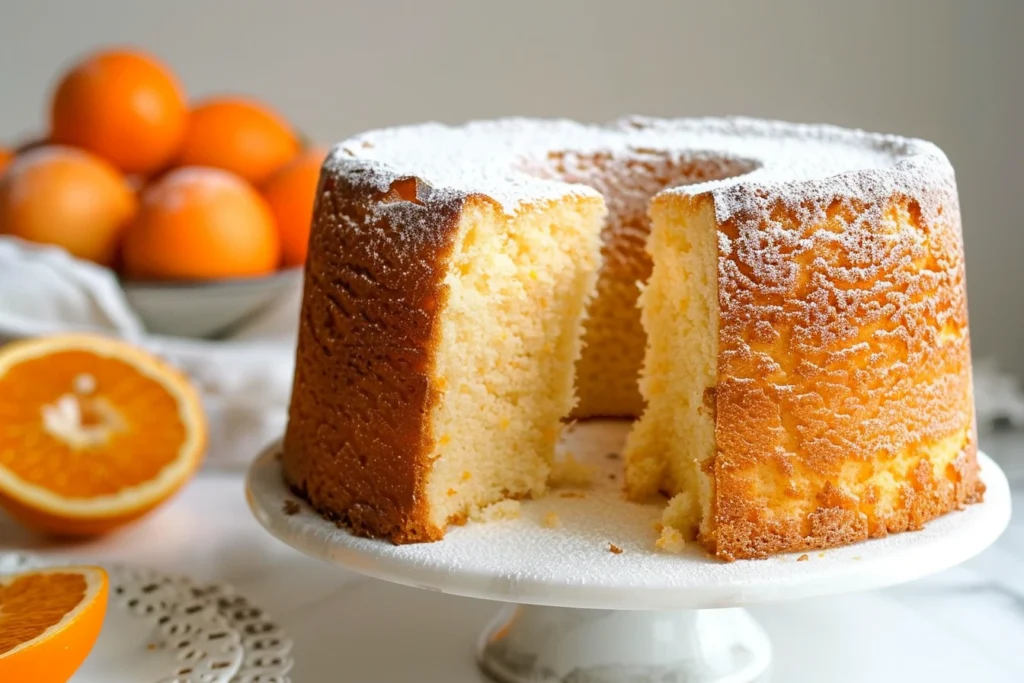
The scent of a fresh Orange Chiffon Cake baking in the oven is one of the most nostalgic and comforting aromas a kitchen can hold. As the cake rises, the air fills with the bright, zesty fragrance of citrus oils mingling with the sweet, delicate scent of toasted sugar and vanilla. It is a smell that promises a texture as light as air and a flavor that feels like a warm afternoon in a sun-drenched grove. For many, this cake represents the height of mid-century baking elegance, a staple at garden parties and family Sunday dinners where a heavy dessert would simply be too much.
Taking that first bite is an experience in structural magic. The crumb is impossibly soft—moist yet bouncy—melting away to leave behind the vibrant, clean tang of fresh orange juice. Unlike a dense butter cake or a crumbly sponge, a well-executed chiffon cake has a unique “spring” to it. It is a dessert that manages to be both humble and sophisticated, relying not on heavy frostings or complex fillings, but on the purity of its ingredients and the technique used to aerate the batter. It is the kind of cake that invites you to have a second slice because it feels so remarkably weightless.
I remember the first time I mastered the art of the chiffon. It was for a family gathering where the humidity was high and the expectations were higher. I watched through the oven glass, hovering with a mix of anxiety and hope, praying the egg foam would hold its integrity. When it finally came out—tall, proud, and golden—and was inverted over a glass bottle to cool, I knew I had unlocked a professional secret. Sharing that cake, seeing how a simple combination of citrus and air could bring such genuine delight to a room full of people, solidified my love for this specific branch of pastry science.
Why You Will Love This Dish
An Unmatched Cloud-Like Texture
The primary reason this Orange Chiffon Cake stands out is its legendary mouthfeel. By combining the richness of egg yolks and oil with the ethereal lift of a stabilized egg white meringue, you achieve a cake that is significantly lighter than a traditional pound cake but more moist and flavorful than a classic angel food cake. It is the “Goldilocks” of the cake world—neither too heavy nor too dry—providing a satisfying chew that remains tender for days.
Vibrant Natural Citrus Profile
In a world of artificial extracts, this recipe celebrates the power of fresh fruit. By utilizing both the juice and the zest of fresh oranges, we layer the flavor profile. The zest provides the essential oils that hit your olfactory senses immediately, while the fresh juice ensures a balanced acidity that cuts through the sweetness of the sugar. There is no mistaking the flavor here; it is bright, honest, and incredibly refreshing, making it an ideal palate cleanser after a rich meal.
A Reliable Showstopper for Any Occasion
Whether you are hosting a formal brunch, a baby shower, or a simple afternoon tea, the Orange Chiffon Cake fits the bill perfectly. Its impressive height and golden-brown exterior make it look like it came from a high-end patisserie, yet the ingredients are pantry staples. It is a sophisticated choice that appeals to all ages, offering a nostalgic charm for older generations while providing a clean, modern flavor profile for younger palates.
What Makes This Recipe Special
The secret to a superior chiffon cake lies in the balance of lipids and aeration. Many standard recipes lean too heavily on flour, resulting in a cake that can feel somewhat “bread-y” or tough. This specific method focuses on a high ratio of liquid to dry ingredients, supported by a meticulously whipped meringue. Unlike sponge cakes that rely solely on eggs for lift, the addition of baking powder in this recipe acts as a “safety net,” ensuring a consistent rise even if your folding technique isn’t yet perfect.
Furthermore, we utilize vegetable oil rather than butter. While butter is prized for its flavor, it solidifies at room temperature and can make a cake feel firm. Oil, being a liquid fat, ensures the cake remains incredibly moist and soft even after being refrigerated. This technical choice allows the delicate orange notes to shine through without being masked by the heavy dairy fats of butter. The result is a cleaner, sharper citrus expression and a crumb that stays fresh far longer than traditional sponges.
Ingredient Essentials and The Science of Flavor
The Foundation: Cake Flour and Leavening
Cake flour is non-negotiable for a true chiffon. It has a lower protein content (around 7-8%) compared to all-purpose flour, which means less gluten development. This results in the characteristic fine, tender crumb. The addition of baking powder provides a chemical lift that works in tandem with the physical lift of the egg whites, creating a dual-action rising process that guarantees height.
The Citrus Core: Fresh Oranges
For this recipe, always opt for heavy, thin-skinned oranges like Valencias or Navels, as they yield the most juice. The zest should be grated finely, avoiding the bitter white pith. The science here is simple: the citric acid in the juice helps to tenderize the flour proteins, while the sugar in the juice caramelizes during baking to create that beautiful golden crust.
The Stabilizer: Cream of Tartar
Egg whites are mostly water and protein. When you whip them, you are trapping air in a protein web. Cream of Tartar (an acidic byproduct of wine fermentation, though entirely non-alcoholic and powder-based) lowers the pH of the whites, which helps the proteins bond more tightly. This creates a more stable, elastic foam that won’t collapse when you fold in the heavier yolk base.
Substitution Guide
- Gluten-Free: You can substitute the cake flour with a high-quality 1:1 gluten-free flour blend. Ensure it contains xanthan gum to help mimic the structure of gluten.
- Vegan Options: While a chiffon cake is traditionally egg-heavy, you can experiment with aquafaba (chickpea liquid) whipped with cream of tartar for the whites, and a commercial egg replacer for the yolks. Note that the texture will be denser and less “springy.”
- Oil Variations: If you prefer, melted coconut oil can be used, though it will add a slight coconut hint to the orange flavor.
The Masterclass: Step-by-Step Narrative
Phase 1: The Dry Incorporation and Yolk Base
Begin by sifting your cake flour, sugar, baking powder, and salt into a large mixing bowl. Sifting is vital in chiffon baking; it removes lumps and aerates the flour, contributing to the lightness of the cake. In a separate smaller bowl, whisk together the egg yolks, vegetable oil, fresh orange juice, and zest.
Visual Cue: The yolk mixture should be smooth and bright orange.
Common Pitfall: Ensure your egg yolks are at room temperature. Cold yolks will not emulsify as easily with the oil, leading to a “streaky” batter.
Phase 2: Creating the Meringue
In a clean, grease-free glass or metal bowl, begin whipping the egg whites with the cream of tartar on medium speed. Once they reach soft peaks, you can gradually add a tablespoon of sugar to further stabilize them. Continue whipping until you achieve stiff, glossy peaks.
Visual Cue: When you lift the beaters, the peaks should stand straight up without drooping.
Common Pitfall: Any trace of fat—be it a speck of yolk or residue on the bowl—will prevent the whites from whipping. Clean your equipment with a dash of lemon juice or vinegar before starting to ensure total purity.
Phase 3: The Delicate Fold
This is the most critical stage. Add about a third of the egg whites to the yolk/flour mixture and stir gently to lighten the base. Then, fold in the remaining whites using a large spatula. Use a “cut and fold” motion: cut through the center, scrape the bottom, and fold over the top.
Visual Cue: Stop the moment no white streaks remain. The batter should look foamy and voluminous.
Common Pitfall: Over-mixing at this stage will deflate the air bubbles you worked so hard to create, resulting in a short, rubbery cake.
Phase 4: The Bake and The Inversion
Pour the batter into an ungreased tube pan. It is essential that the pan is not greased; the batter needs to “climb” the walls of the pan to reach its full height. Bake at 325°F (165°C) for 55 to 60 minutes. Once removed, immediately invert the pan over a bottle or use the pan’s “feet” to let it cool upside down.
Visual Cue: The cake is done when the top springs back when lightly touched and a skewer comes out clean.
Common Pitfall: Skipping the inversion process. If a chiffon cake cools upright, its own weight will cause the delicate air cells to collapse, leading to a dense layer at the bottom.
Creative Variations and Customizations
The Mediterranean Twist
Incorporate a teaspoon of orange blossom water into the yolk base and replace 1/4 cup of the orange juice with a high-quality extra virgin olive oil. This adds a sophisticated, floral depth and a slightly savory undertone that pairs beautifully with the citrus.
The Spiced Orange Warmth
Add 1 teaspoon of ground cardamom and 1/2 teaspoon of ginger to the dry ingredients. The warmth of these spices creates a “chai-orange” profile that is particularly comforting during the autumn and winter months.
The Berry Burst
Gently fold 1 cup of fresh blueberries (tossed in a teaspoon of flour) into the final batter just before pouring it into the pan. The berries will burst during baking, creating pockets of jammy sweetness that contrast the zesty chiffon base.
Serving and Pairing Suggestions
For the best presentation, place the cake on a tall pedestal stand. Drizzle the orange glaze over the top, allowing it to drip naturally down the sides. To elevate the aesthetic, garnish the center and edges with candied orange slices and a few sprigs of fresh mint.
Side Dish Pairings
- Honey-Whipped Cream: A dollop of heavy cream whipped with a touch of honey and vanilla bean paste provides a creamy contrast to the airy cake.
- Fresh Pomegranate Arils: The tart crunch of pomegranate adds a textural element and a pop of color.
Non-Alcoholic Drink Pairings
- Sparkling Rosemary Lemonade: The herbal notes of rosemary and the sharp acidity of lemon complement the orange flavor perfectly.
- Earl Grey Tea: The bergamot in Earl Grey is a natural partner for citrus-based desserts, offering a sophisticated, tannic balance to the sweetness.
Storage, Reheating, and The Next Day Magic
Chiffon cake stores exceptionally well because of the oil content. Wrap it tightly in plastic wrap or place it in an airtight container at room temperature for up to 3 days. For longer storage, it can be refrigerated for up to a week.
If you find yourself with leftovers that are starting to lose their spring, try “The Next Day Magic” trick: lightly toast a slice of the cake in a pan with a tiny bit of coconut oil until the edges are caramelized and crispy. Serve it warm with a scoop of vanilla bean gelato. It transforms the light sponge into a decadent, warm dessert that feels entirely new.
Helpful Pro Tips from the Kitchen
The Temperature Rule: Always ensure your eggs are at room temperature. Cold eggs don’t trap air as efficiently, and you’ll find it takes twice as long to reach the necessary stiff peaks.
The Pan Choice: Never use a non-stick pan for a chiffon cake. The batter needs a “grippy” surface to hold onto as it expands. A standard aluminum tube pan is the industry gold standard for this recipe.
The Gentle Release: When the cake is completely cool, use a thin, flexible offset spatula to carefully run around the edges of the pan and the center tube. Do this in one continuous motion to keep the sides of the cake smooth.
Zest Before You Juice: It is a common mistake to juice the oranges and then realize you forgot to zest them. It is nearly impossible to zest a squeezed orange, so always prep your zest first.
The Professional Recipe Card
- Prep Time: 25 Minutes
- Cook Time: 60 Minutes
- Total Time: 1 Hour 25 Minutes
Description
A masterclass in citrus baking, this Orange Chiffon Cake is an airy, moist, and vibrantly flavored dessert. Utilizing the technical precision of a stabilized meringue and the moisture of vegetable oil, it delivers a superior crumb that remains tender for days. Perfect for celebrations or a refined afternoon treat.
Ingredients
For the Cake Base:
- 1¾ cups (210g) Cake Flour, sifted
- 1¼ cups (250g) Granulated Sugar (divided: 1 cup for batter, ¼ cup for meringue)
- 1 tbsp Baking Powder
- ½ tsp Salt
- ½ cup Vegetable Oil
- 7 Large Egg Yolks, room temperature
- ¾ cup Freshly Squeezed Orange Juice
- 1 tbsp Grated Orange Zest
For the Meringue:
- 7 Large Egg Whites, room temperature
- ¼ tsp Cream of Tartar
For the Citrus Glaze:
- 1 cup Powdered Sugar, sifted
- 2 tbsp Freshly Squeezed Orange Juice
Instructions
- Preheat and Prep: Preheat your oven to 325°F (165°C). Ensure you have a 10-inch (25cm) ungreased tube pan ready. Do not grease the pan.
- Combine Dry Ingredients: In a large bowl, whisk together the sifted cake flour, 1 cup of granulated sugar, baking powder, and salt. Make a well in the center.
- Create the Yolk Mixture: Add the vegetable oil, egg yolks, ¾ cup orange juice, and orange zest into the well. Whisk until the mixture is completely smooth and no lumps remain.
- Whip the Meringue: In a separate, perfectly clean bowl, beat the egg whites and cream of tartar on medium speed until soft peaks form. Gradually add the remaining ¼ cup of sugar and continue beating on high speed until the peaks are stiff and glossy.
- Fold the Batter: Gently fold about one-fourth of the egg whites into the yolk batter to lighten it. Add the remaining whites and fold carefully with a spatula using a “down-across-up-and-over” motion until no white streaks are visible.
- Bake: Pour the batter into the tube pan. Run a knife through the batter to pop any large air bubbles. Bake for 55 to 60 minutes, or until the top is golden brown and springs back when touched.
- Invert and Cool: Immediately invert the pan onto its legs or over a narrow-necked bottle. Let the cake cool completely in this upside-down position (about 1.5 to 2 hours).
- Release: Once cool, run a thin knife or spatula around the edges and the center tube. Gently remove the cake from the pan.
- Glaze: Whisk the powdered sugar and 2 tablespoons of orange juice until smooth. Drizzle over the top of the cooled cake.